Saturday, June 22, 2013

Welcoming Families Around the World


File:Flag of Brazil.svg

Country of Origin
The name of my family’s country of origin is Brazil. Brazil is a country located in South America. I do not know much about Brazil. The setting will be an early childcare center.

Five ways I will prepare myself to be culturally responsive towards this family:
1. I will do a lot of research online and by going to the library about Brazil. I will like to learn more about the daily life in Brazil.
2. I will also try to familiarize myself with the school system in Brazil. I will find out how the early childcare system in Brazil is run. I will do this so that the child and family will have a smooth and comfortable transition.  
3. I will also try to learn some of the basic greetings from Brazil and buy a dictionary in case the family does not know English. The main language spoken in Brazil is Portuguese so I will also ask my mother’s friend who is Portuguese to teach me a few of the greetings.
4. I will also try to learn some songs from Brazil especially children’s songs so that I can teach to the rest of the class.
5. Lastly, I will decorate the classroom with greetings and pictures of Brazil to welcome the child and family to the center.
Brief statement describing in what ways you hope that these preparations will benefit both you and the family:

I hope that these preparations will welcome the new family not only to the child development center but also to America. I hope to learn much more about a country that I do not much about. These preparations will also help the other children to learn about a new culture; it will also prepare the children to not be biased or prejudiced towards the new child. It will be a great learning experience for myself and the other kids in the class. 

Saturday, June 15, 2013

The Personal Side of Bias, Prejudice, and Oppression

A memory of an incident when I experienced bias was an event that took place at a church I attended for a conference. The church was a predominantly Nigerian church; however, the conference was for other churches with different ethnic backgrounds. When it came to lunch, they served us Nigerian food which consisted of rice and a chicken that is tough to eat. I heard a few people complaining about the food and asking why people always insist on having Nigerian food at these events. A few people even mentioned it when there was a Q&A portion that people need to understand that not everyone likes or wants to eat Nigerian food and they should make sure to cater to everyone.

The incident diminished equity because the church assumed that everyone would enjoy eating the Nigerian food. There were no other options for lunch. You either ate the rice and chicken or you would be hungry. A few people had to buy food outside when they paid a registration fee that included lunch.

The incident brought up feelings of irritation. Although I am Nigerian I do not always want to eat Nigerian food. Also, I felt the frustration of those who did not want to eat the food. I would feel that there should have been more options for lunch and all those in attendance should have been taken into consideration.

In order for this incident to turn into an opportunity for greater equity, the church which hosted the event and the food coordinators would have to change. The church must understand that not everyone who is coming to the conference will be Nigerian. Those coordinating food must also change the notion of constantly serving Nigerian food at their functions. The church as a whole must be more open-minded to outsiders coming into their church.


Saturday, June 1, 2013

Practicing Awareness of Mircroaggressions

One example of a microaggression I detected this week happened this morning at a wedding I attended. It was a beautiful multicultural wedding. The groom is Cuban and the bride is African-American. We were at the reception and the party began. The DJ began to play a variety of songs from old school to new school. After about an hour the DJ began to play Spanish music. At this point, one of my friends exclaimed “Duh, of course they would play Spanish music; I’m surprised they did not play it earlier”. At first, I laughed at her statement. After awhile I actually thought what she said and realized it was not funny. I told her that just because he is Cuban may not even mean that he likes Spanish music or that Spanish music must be played at his wedding.  She told me that she did not really mean the statement and that she had not really thought about what she said. She actually apologized and we went on with the party.


This experience made me realize how often and quickly microaggressions happen. I also realized that sometimes we may not realize that our comments are stereotyping or discriminating. Many people do not think about what they say before they say it. I was reminded that sometimes when microaggressions happen they are not truly intended to hurt anyone. Society is so used to making jokes and comments about people who are not like us. The experience reminded me to think before I speak and be careful of hurting other people. 

Saturday, May 25, 2013

Perspectives on Diversity and Culturey


From the three people I interviewed, their definition of culture were different. However, each person described diversity as to having some variation. 

Younger Sister -Nigerian American


My definition of culture is the way a group of people share commonalities. How they perceive things, think, react/respond, and associate with themselves, others, and the world.

Diversity is when a variety is present. When different people and races are together in one area or location. It can be when you have different traditions, cultures, and ways of living are merged, combined, or together.

Older Sister-Nigerian American
Culture is a way of life that represents a person or a group. Culture does not have to be a permanent way of life, however. One can choose to embrace another culture outside if his/her cultural background.

Diversity is the product of mixing people of different cultural backgrounds. Diversity works best when the various cultures are able to appreciate the other.

Colleague -Israeli/Syrian/Irish Female
Culture to me are different ways of.living due.to traditions, the environment and sometimes religion. I think all these factors contribute to different cultures.
I think diversity is variations of different people, places and things.

From the definitions I received there were a few aspects of culture and diversity that I have studied so far. Those aspects are a person's thoughts, reactions, associations with others and the world, way of life, tradition and environment. These aspects of culture and diversity are all ways some individuals may choose to identify themselves. My younger sister defined diversity as ways of living that merged or combined. Similarly Derman-Sparks & Edwards (2010) described culture as a sense of connectedness. 
One aspect of culture that we have discussed that was omitted from the responses was family culture. Louise Derman-Sparks defines family culture as how a particular family is in the world, the rules of their behavior, the family’s beliefs, values, goals for their children and parenting (Laureate Education, 2011). None of them seemed to touch on the fact that culture also represents family. They each mentioned traditions and culture as a way of life. I believe that not understanding someone's family culture can play a role  in understanding that person's way of life and or thinking. 
Hearing my sisters and colleague's definitions of culture and diversity allowed me to take a step into their views on the topic. Their definitions coincide with my definition of culture and diversity. It was interesting to see that my sister's responses were similar. None of their answers were wrong, but each was unique. I have come to a better understanding that people do have an understanding of what culture and diversity is; none of them hesitated to give me a response. I was glad that they do have an understanding and that they were all open minded. 

References 
Derman-Sparks, L., & Edwards, J. O. (2010). Anti-bias education for young children and ourselves. Washington, DC: National Association for the Education of Young Children      (NAEYC). Retrieved from:             https://class.waldenu.edu/webapps/portal/frameset.jsp?tab_tab_group_id=_2_1&url=%2F webapps%2Fblackboard%2Fexecute%2Flauncher%3Ftype%3DCourse%26id%3D_2817       923_1%26url%3D


Saturday, May 18, 2013

My Family Culture

Wow! If this catastrophe happened to me I would initially be devastated. To leave a place i call home to a brand new place with a culture entirely different than my own would be sad and overwhelming. Nonetheless, I would be very grateful to at least have my family with me.

The three items I would take with me would be my wedding album, wedding DVD and iPod.

I would bring my wedding album because it was a very special event with all my family and friends. I had two weddings: A Nigerian traditional wedding and a traditional church wedding and reception. The pictures will remind me of that event and some of the fun things we do in my culture. I would bring my wedding DVD because it's another reminder of the day my life changed. Hearing my family and friends and seeing their joy would always remind me of them. Seeing the Nigerian dancers would be another reminder of my culture. Lastly, i would bring my iPod because I love music! I have all types of music especially the music from my country. Listening and singing along is calming and soothing especially during rough times.

Clip from my wedding: Me & husband are in purple headties in middle

If I were told that I could only keep one item out of the three I would be very confused and upset. It would be very herd to decide which item to keep since they are all very dear to me and are filled with memories. Each item has a different meaning to me, but they all represent me. To not hear songs that I love would be sad. To not have photos and videos of recognizable people would be heartbreaking. I am not sure that I would be willing to give up two items.

It was very hard to even choose three items. I had to look around my house and there were so many things that I would want to take with me. From this exercise, I was reminded of what my family and friends mean to me. It also reminded me of my love for music. I do not go a day without listening to music. Not having my music or ability to at least see the faces of those I love would bring tears to my eyes. All these three remind me of who I am and where I come from.


Saturday, April 27, 2013

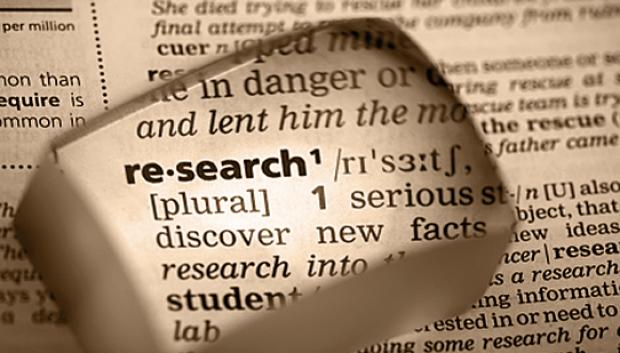
When I Think of Research...


This course has taught me much about research especially in the early childhood field. From this course I have come to an understanding about the importance of research in the early childhood field. Research helps us understand past and current trends in the field. Research explains issues in the field we may have little or no understanding of. From this course I have also gained an understanding of the steps taken to design a research project. I have learned about the different types of research designs as well as different research methods.

My ideas about the nature of doing research have changed in a few ways. Before this class, I did not know how much time, thinking and planning goes into conducting research. I thought research was much simpler than I came to realize.

When it comes to planning, designing and conducting a research I learned a lot. I have learned the importance of developing a research question. I have learned different instances where you may or may not need to use random sampling when selecting participants. I have learned what it takes to make a research valid. I have also gained a better understanding on the importance of consent especially concerning research with children.

The most challenging part of this research journey was choosing a subtopic and research question. From the beginning of the course, I knew which topic I wanted to research; however, the difficulty came after selecting subtopics. My general topic was autism. I then decided to focus on different development skills in Autism. When I finally selected a subtopic I had to narrow it further down; which I decided to be cognitive skills. My next challenge came in deciding what about cognitive skills which drew me to language development and sentence formation. Once I figured this all out, I thought I had a good research question based on what I have learned. However, my research question was too basic. I changed it a few times but it was still not great. I met this challenge by taking suggestions by Dr. Dartt and re-reading how to form a research question. Dr Dartt helped me greatly with this challenge.

From this course, as an early childhood professional I will look to research, but not conduct research. I have come to understand that research is not for me. I know that it is important to know what research is being done in the early childhood field and use research when needed. However, in the future I do not plan on conducting any research projects.

Lastly, I am grateful for this experience. It was a challenge at times, but I have learned a lot especially from my peers. Thank you everyone and I wish you the best as you continue this journey in obtaining your Masters in Early Childhood Studies. 

Saturday, April 6, 2013

Research Around the World


I chose to explore the Early Childhood Australia website. The link for the website is http://www.earlychildhoodaustralia.org.au/. I chose this site because I do not know of any current issues or trends in Australia. I also wanted to see if there are any similarities between Australia and America. Their mission is to advocate for the rights, quality and equity in issues concerning children from birth to age 8. Early Childhood Australia is also the national umbrella organization for children’s services in Australia.

I clicked on the tab early childhood news to find current research topics in Australia. I found one article titled, “Fair, inclusive, quality education every child’s right; Early Childhood peak bodies welcome increased support for children with a disability”. This article discussed that quality early education and care is a right for all children. The article discussed how support should increase so that children with disabilities will be able to benefit from a quality education. I also explored the Every Child Magazine section of the website. I read an article on asthma and asthma management. The article was more of an information resource for families. The symptoms of asthma were discussed as well as the Emergency Asthma Management which provides directions and risk reductions for those with asthma. The article also discussed ways Australia can become more Asthma friendly.

It was very interesting exploring this website. They had a wealth of information available. They have a section called Early Learning Series. Here you can find resources to enhance learning for young children whether you are a parent or caregiver. They had so many different resources organized by topic including promoting positive behavior, confidence and coping skills, fussy eaters, sensory learning and math to name a few, there are much more topics. I clicked on the sensory learning topic to read more about it. I actually thought that the information was free so I was a little surprised to find out that you have to purchase the information on sensory learning or any other topic; however, they do provide sample chapters.

I randomly came across the Early Childhood Australia position statement on Children of Asylum Seekers. The position statement mentioned that half of the world’s refugees are children. The paper discussed that many refugee children enter Australia legally and illegally. They listed a list of principles and recommendations which should be applied to support the interests of refugee children and asylum seekers. One recommendation I liked is that these children should be allowed access to the same education that Australian children receive.   

For those who would like to stay updated with the organization they have a newsletter called the Voice which you can subscribe to for free. They also have their magazine Every Child which you can subscribe to as well but for a fee. 

Reference: